Code Cascades: How Layered Mobile Incentives Reshape Live Dealer Payout Routes
Written by Sam Otto · Jun 20, 2026

Code Cascades: How Layered Mobile Incentives Reshape Live Dealer Payout Routes
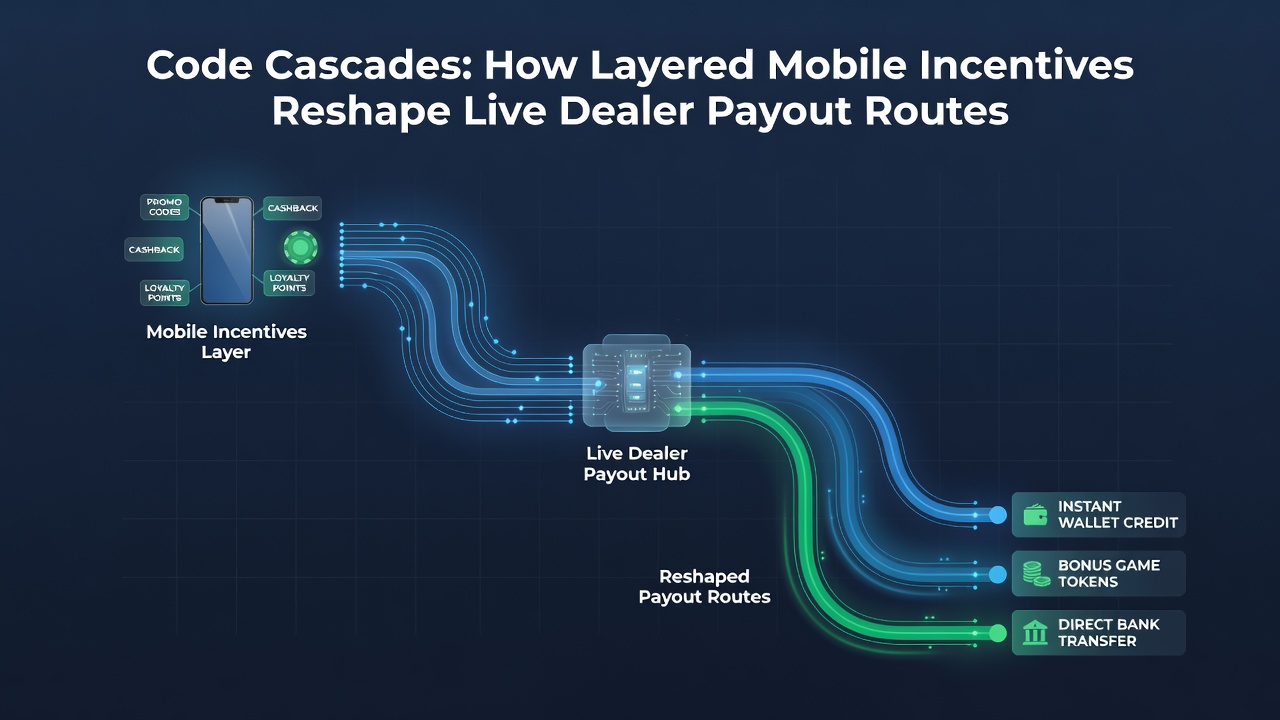
Live dealer platforms have integrated layered mobile incentives that stack bonus codes, loyalty tiers, and session-based rewards into single player accounts, and these systems create new pathways for fund movements from game tables to withdrawal processing. Operators deploy these cascades through dedicated apps where each code layer triggers automated verification steps that feed directly into payout queues, reducing manual reviews in many cases.
Mechanics Behind Layered Incentive Structures
Each code layer attaches specific conditions such as game type eligibility, minimum playtime, or table minimums, yet mobile systems process these conditions in sequence rather than isolation, so a single deposit can activate multiple overlapping rewards that accumulate value across live blackjack, roulette, and baccarat sessions. Data from industry reports indicates that operators using these stacked structures saw average session values rise by measurable margins in 2025, with mobile users accounting for the largest share of the increase.
What's interesting is how the sequencing works in practice, because a player who enters a live dealer room with an active loyalty multiplier often receives an additional time-limited code that applies only to that table, and the system records every interaction as part of a continuous transaction log that later determines payout eligibility. This log becomes the foundation for the route a withdrawal request follows once the player decides to cash out.
Changes to Payout Processing Routes
Traditional payout routes relied on batch verification that occurred after a player completed all bonus requirements, but layered mobile incentives introduce real-time checkpoints that update the status of each code as play progresses. When a final layer clears, the platform can route the approved balance through accelerated channels that bypass certain compliance holds, particularly when the entire sequence occurred inside a verified mobile session.
Research from the University of Nevada, Las Vegas Center for Gaming Research shows that platforms with integrated code cascades processed approved withdrawals up to 18 percent faster on mobile devices compared with desktop equivalents during the first half of 2026. The study attributes the difference to the continuous data stream generated by layered incentives, which supplies regulators and payment processors with granular activity records from the outset.
Regional Implementation Patterns Observed in Mid-2026
Operators in regulated markets outside the UK have adopted similar frameworks, and figures released in June 2026 by the Ontario Lottery and Gaming Corporation revealed that mobile live dealer traffic carrying layered incentives represented 41 percent of total platform volume. Those figures also noted shorter average payout timelines for accounts that maintained active code sequences throughout their sessions.
Yet the same data set highlighted regional differences in how quickly funds move once a cascade completes, because payment partner agreements vary by jurisdiction and some processors still require additional confirmation even when mobile logs show full compliance. Observers note that platforms able to pre-clear incentive layers through their internal systems gain measurable advantages in meeting player expectations for speed.
Technical Integration with Live Dealer Systems
Live dealer software must communicate continuously with the incentive management layer so that every card dealt or wheel spin updates the status of active codes, and this integration creates a single data pipeline that payment teams later reference during withdrawal reviews. When the pipeline functions without interruption, the route from table balance to external bank account shortens because fewer reconciliation steps remain at the end.
Industry associations such as the American Gaming Association have documented how these technical connections reduce error rates in bonus accounting, and their 2026 quarterly brief pointed to mobile-specific APIs as the primary driver behind the observed efficiency gains. The brief further indicated that operators investing in unified code and payout systems reported fewer disputes over expired or misapplied layers.
Future Adjustments Expected Through Late 2026
Payment processors continue to refine their interfaces with mobile incentive platforms, and upcoming protocol updates scheduled for the third quarter of 2026 aim to embed even more verification points directly into the live dealer stream. Those updates could further compress payout routes by allowing certain high-volume accounts to move funds through pre-approved corridors once all code layers have cleared.
Conclusion
Layered mobile incentives continue to influence the structure of live dealer payout routes by supplying continuous verification data that platforms and processors use to streamline approvals. The patterns observed through June 2026 demonstrate measurable shifts in processing speed and route selection, particularly on mobile channels where code cascades generate the most detailed activity records. Additional technical refinements expected later in the year will likely extend these effects across more jurisdictions and operator networks.